Dementia Action Week 2025: Dr Mohinder Kapoor’s blog

Dementia is a progressive, degenerative condition that affects not only the person living with it but their friends and families as well. It affects over 55 million people worldwide and this number is expected to continue to rise over the coming years largely due to an ageing global population and increased life expectancy.
Dementia Action Week 2025 will be held from 19 May to 25 May 2025. This week seeks to inspire action to improve the lives of people affected by dementia, empowering people to take meaningful steps towards change. The week focuses on early diagnosis, showcasing activities for people living with dementia, and building dementia-friendly communities.
I felt privileged and grateful to have been invited as a guest speaker for the mood and memory workshop for older adults in Huddersfield on 12 February 2025. This workshop was organised by the Age UK Calderdale and Kirklees.
It was a great session with attendees joining in important and useful conversations, and discussions about memory/mood issues in older adults. I learnt a few things about the services available locally in the community that help and support people with dementia.
It was an excellent opportunity to highlight the work we do at the Trust to help older adults with cognitive problems and mental health issues. We talked about sensitive and personalised ways to practice medicine including medications and their side effects. We also covered grief and challenges older adults come across after their retirement.
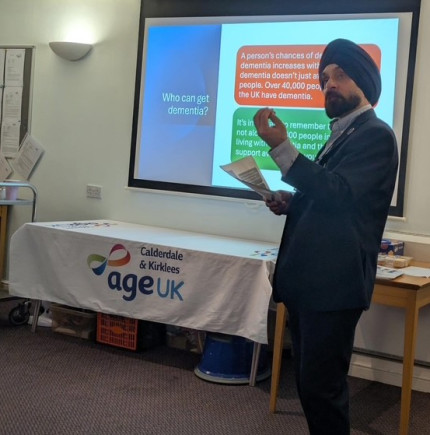
We talked about famous personalities like Bruce Willis, Robin Williams, Sean Connery, Bobby Charlton, and others having a dementia diagnosis and how it affected them differently due to each of them having a different type of dementia.
Another important thing we covered was the fact that there is not always sad news when we see people in our memory clinics as not all of them get a dementia diagnosis. There is that feeling of hope and expectation when they come to see us in the memory clinics. And even if they get a diagnosis, some of them have opportunity to try memory medication and get involved in cutting edge research and receive the support to manage dementia in the community.
In addition to this we also discussed the other benefits of having an early dementia diagnosis. These are:
-
Access to therapies and support groups.
-
Protection from being treated unfairly at work because of the condition.
-
Financial benefits.
-
Access to information to help you live well with dementia.
-
Access to information to help people understand what you are going through.
Most importantly we talked about why we love older adults. As someone said they are walking textbooks of modern history. There is so much to learn from their life events and experiences. There are plenty of opportunities to gain experience from their words of wisdom and most valuable are the endless blessings that we receive from them.
At the end we finished the session highlighting that person centred, individualised care, promoting independence and prioritising choice are at the very heart of our work in older peoples’ services.
A person is never defined by illness or diagnosis – You are who you are. According to Bethany Relyea – “At the end of the day, individuals with dementia need connection, just like the rest of us. They have real human needs that are not simply erased by their diagnosis.”