Creative photography project aids stroke recovery in Barnsley
A unique photography project, developed by the Creative Minds charity in partnership with the Barnsley integrated community stroke team at the Trust and the Stroke Association, is making a meaningful difference in the lives of stroke survivors and their carers. The project combines creativity with health and wellbeing, providing a supportive space for recovery through the art of photography.
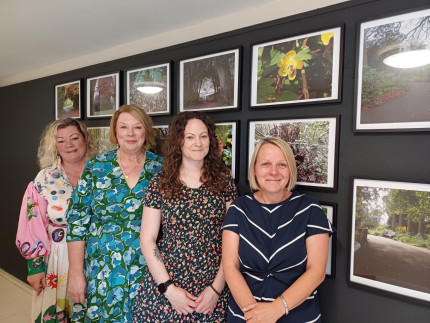
The project brought together eight stroke survivors and their partners in Barnsley to engage in a specialist photography group aimed at aiding both mental and physical recovery. Meeting four times over the course of a year, participants explored the changing seasons and natural beauty of Locke Park in Barnsley while learning how to use cameras and photography techniques. Kirsty Sidebottom, creative practitioner at Creative Minds, guided the group, helping members develop new skills and confidence in a social and creative environment. The photographs taken during the project are currently exhibited at the Cooper Gallery in Barnsley, offering a confident boost to participants. Plans are underway to display the artwork permanently at the stroke recovery unit at Kendray Hospital, further celebrating the survivors’ achievements.
Kirsty Sidebottom, creative practitioner at Creative Minds, said: ‘‘Recent research has shown that being outside with others can have a positive effect on health and wellbeing. The benefits of this project have been not only the participants learning new skills, but tackling social isolation, mindfulness and encouraging taking fresh air and exercise.”
Gill Richmond-Burns, life after stroke co-ordinator at South West Yorkshire Partnership Teaching NHS Foundation Trust, said: “Working with Creative Minds and the Stroke Association has been very rewarding. All the stroke survivors and their carers have enjoyed meeting regularly to work on something different, learn new skills, and forge friendships in a supportive environment—all of which helps with recovery. The life after stroke element allows for peer support to be developed often on completion of clinical rehabilitation.”
This project’s aim was to integrate creativity and the arts into mainstream health and wellbeing practices, demonstrating the power of creative engagement to enhance recovery and quality of life.